
Dear Clients:
U.S. stocks rebounded sharply in the second quarter of 2026, with the S&P 500 and Nasdaq posting their biggest quarterly rallies since 2020 as stronger-than-expected corporate earnings outweighed concerns about geopolitical conflict, inflation and slowing economic growth. By June 2, the S&P 500 had notched its 24th all-time high of the year, a sharp and welcome contrast to the first-quarter swoon caused by the February 28 start of the war and accompanying fears of stagflation–the simultaneous combination of high inflation, slow or stagnant economic growth and high unemployment.
As shown in the table below, the S&P 500 finished the first half of 2026 with a total return of 10.21%, a significant turnaround from the -4.35% total return posted in the first quarter. Closer to home, while short-term performance ebbs and flows, we are pleased that our long-term investment approach continues to garner national attention (see press release and important disclosures).
Q2-2026 Performance Highlights
| Periods Ending June 30, 2026 (Total Return) | 3-Months | 6-Months | 12-Months |
| S&P 500 | 15.20% | 10.21% | 22.32% |
| S&P 500 (Equal-Weight) | 11.39% | 12.11% | 19.16% |
| S&P 500 (Growth) | 21.89% | 11.99% | 25.66% |
| S&P 500 (Value) | 8.00% | 8.01% | 18.37% |
1. Total Return assumes the reinvestment of dividends in the index.
2. The S&P 500 Index is an unmanaged, capitalization-weighted index generally representative of the U.S. market for large capitalization stocks. This index cannot be invested in directly.
3. The equal-weight S&P 500 Index is an unmanaged, equally-weighted index generally representative of the U.S. market for large capitalization stocks. This index cannot be invested in directly.
4. The S&P 500 Value and Growth Indices are sub-indices of the S&P 500 Index whose constituents are determined on the ratios of book value, earnings and sales to price. These indices cannot be invested in directly.
5. Past performance is no guarantee of future results.
Mid-Year Review: Headlines vs. Results
As we reach the midpoint of 2026, one lesson from the first half of the year stands out: headlines and the markets told two very different stories.
The conflict in Iran sent oil prices surging, which we all felt at the gas pump. Consumer sentiment fell to historic lows. Markets dropped nearly 10% late in the first quarter and recession fears resurfaced. AI dominated the conversation, with some proclaiming it the next productivity revolution while others warned it was a bubble waiting to burst. Nearly every day seemed to bring another reason to worry.
Stocks staged a historic rally in the second quarter, but it wasn’t all strawberries and cream. Just take a look at these whipsaw headlines from The Wall Street Journal over a span of just three weeks.
- Nasdaq Suffers Worst Day In More Than Year (June 6)
- Market Rout Leaves Wall Street Bracing for Rockier Times (June 8)
- S&P, Nasdaq Post Best Quarter in Years (July 1)
Yet patient investors were rewarded. Despite the uncertainty, the stock market is solidly positive for the year, driven largely by stronger-than-expected corporate earnings. The stock market didn’t wait for the headlines to improve. It climbed despite the worry.
The Bigger Picture
This may be the most important lesson from the first half of the year: following the news was far more stressful than simply being a long-term investor.
We’ve seen this pattern before: pandemic warnings, “economic hurricane” predictions and recession forecasts that never arrived. Each year the headline is different, but the emotional pull is the same. Investors who react emotionally often abandon a sound investment strategy at precisely the wrong time.
Looking Forward
The second half of the year will almost certainly bring new headlines and new uncertainties, especially with mid-term elections around the corner (more below). Yet uncertainty did not derail corporate earnings, prevent businesses from adapting or stop patient investors from being rewarded.
Uncertainty isn’t unusual. It’s permanent. Your financial plan and investment strategy were never built around certainty. They were designed with uncertainty in mind.
Prepare Yourself Mentally For Upcoming Election Season
Mid-term election years (“MTEYs”) have historically been more volatile due to political uncertainty. As we move closer to mid-term elections, one thing is almost certain: political headlines will become louder, opinions will become stronger and every news outlet will shout why this election changes everything.
Our friend Sam Stovall at CFRA Research has studied MTEYs going back to 1946. According to Stovall, “during ‘wave’ years, when the Executive and Legislative branches were controlled by the same party (as they are now), the elections resulted in the loss of four seats in the Senate and 33 seats in the House of Representatives, frequently diluting or shifting control of Congress.”
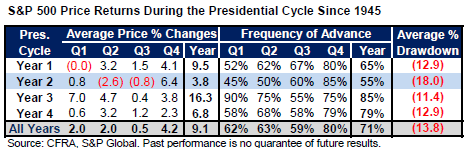
Further, “as a result of this uncertainty, the S&P 500 in MTEYs since WWII recorded a paltry 3.8% price increase and rose in price only 55% of the time, compared with an average gain of nearly 11% and a 76% frequency of advance for the other three years in the cycle. What’s more, the second and third quarters (of MTEYs) recorded the only consecutive average declines in the 16-quarter Presidential Cycle. Finally, the S&P 500 endured an average intra-year drawdown of 18% during MTEYs, which was more than five percentage points higher than the average for the other three years in the cycle.”
As always, history is descriptive, not predictive. It reinforces the likelihood of volatility but does not offer a forecast. In year two of President Trump’s first term (2018), the S&P 500 fell 6.2%, while the index fell 19.4% in year two of President Biden’s term (2022). What happens in 2026 is unknowable and not under our control. We believe the greater danger is not the election itself, but allowing our political beliefs to influence our investment decisions.
What we can control is maintaining discipline regardless of the outcome. For us, that means staying diversified, focused on quality businesses and alligned with your long-term plan, rather than reacting to each headline.
Summary
Thank you for the confidence you have placed in us. As Epictetus observed nearly 2,000 years ago, wisdom begins by distinguishing between what we can control and what we cannot. Markets will continue to fluctuate, elections will come and go and headlines will compete for our attention.
Our focus remains on the factors we can control: thoughtful planning, disciplined investing and helping you stay committed to your long-term goals through both calm and volatile periods.
Spotlight Stock—Markel Group, Inc. (NYSE: MKL)
Markel Group is a diversified holding company that builds shareholder value through three complementary businesses: specialty insurance, investments and wholly owned operating companies. Its specialty insurance franchise generates underwriting profits and insurance float, providing a durable source of capital for investment. That capital is allocated using a disciplined, long-term investment philosophy focused on high-quality fixed-income securities and equities.
Beyond insurance and investing, Markel owns a diverse portfolio of private businesses through Markel Ventures. These companies operate independently under a permanent ownership model, enabling management teams to pursue long-term growth without the pressures of short-term financial targets.
We believe the market continues to undervalue the long-term compounding potential created by Markel’s disciplined capital allocation, decentralized operating model and ability to reinvest insurance float at attractive rates. Profitable underwriting funds investments, investments enhance book value and intrinsic value and operating businesses provide diversified, recurring cash flow. Together, these three engines create multiple avenues for value creation, making Markel a distinctive long-term compounder that is often compared with Berkshire Hathaway.
We highlight Markel because its disciplined capital allocation and long-term orientation reflect the same principles we apply in managing your portfolio.
Carrie Loesch Joins KM as Client Service Coordinator
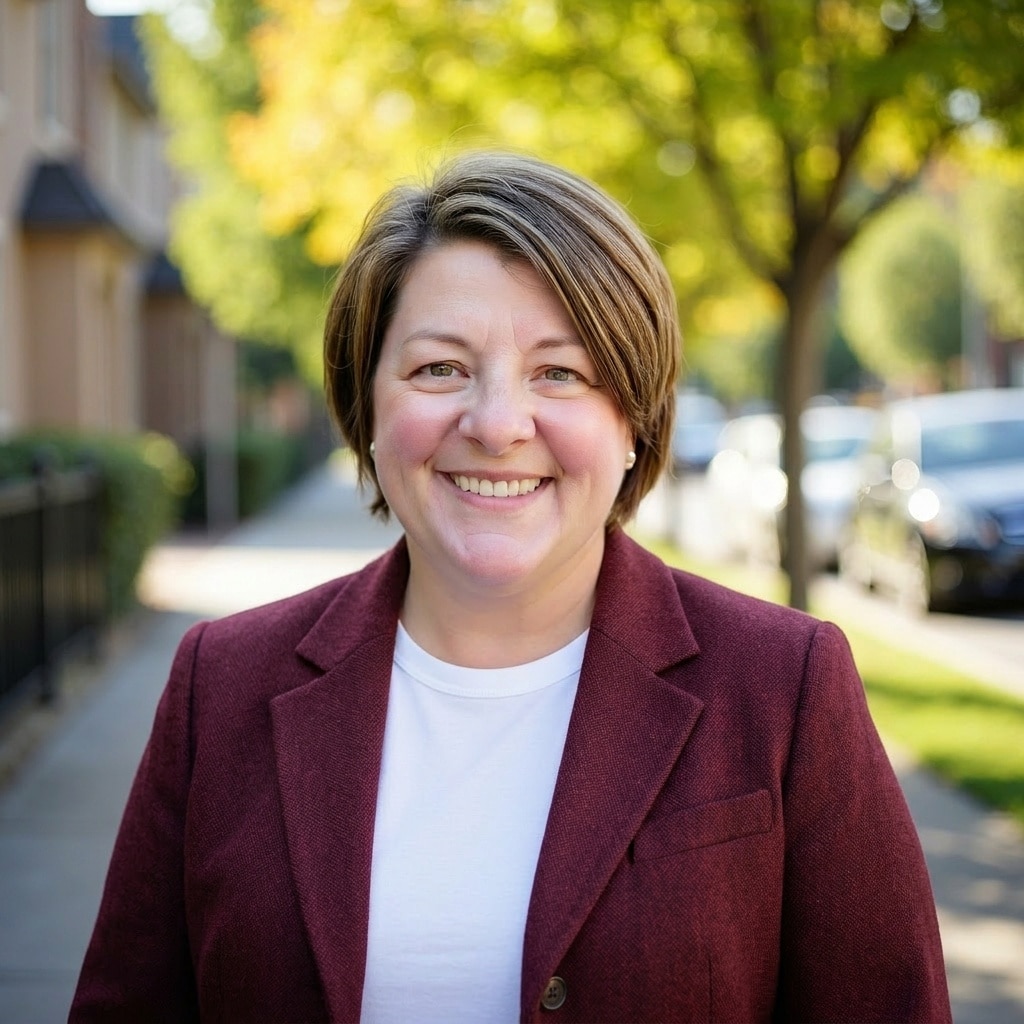
We are very pleased to announce Carrie has joined our team after more than 25 years in banking. Since 2012, Carrie was a Banking Center Manager for Old National Bank (Greensburg, IN), where she was responsible for operations, managing staff and constantly improving client satisfaction. Carrie brings a client-first mindset, exceptional attention to detail and a strong problem-solving orientation.
Carrie will be working primarily with our Directors of Client Service, Matt Kirr and Zach Greiner, CFP. We are confident she will have a significant positive impact on our business and client experience.
Regards,
Kirr, Marbach & Company, LLC
Past performance is not a guarantee of future results