


Buffett’s “farewell” an instant Thanksgiving classic
Mickey Kim / November 28, 2025
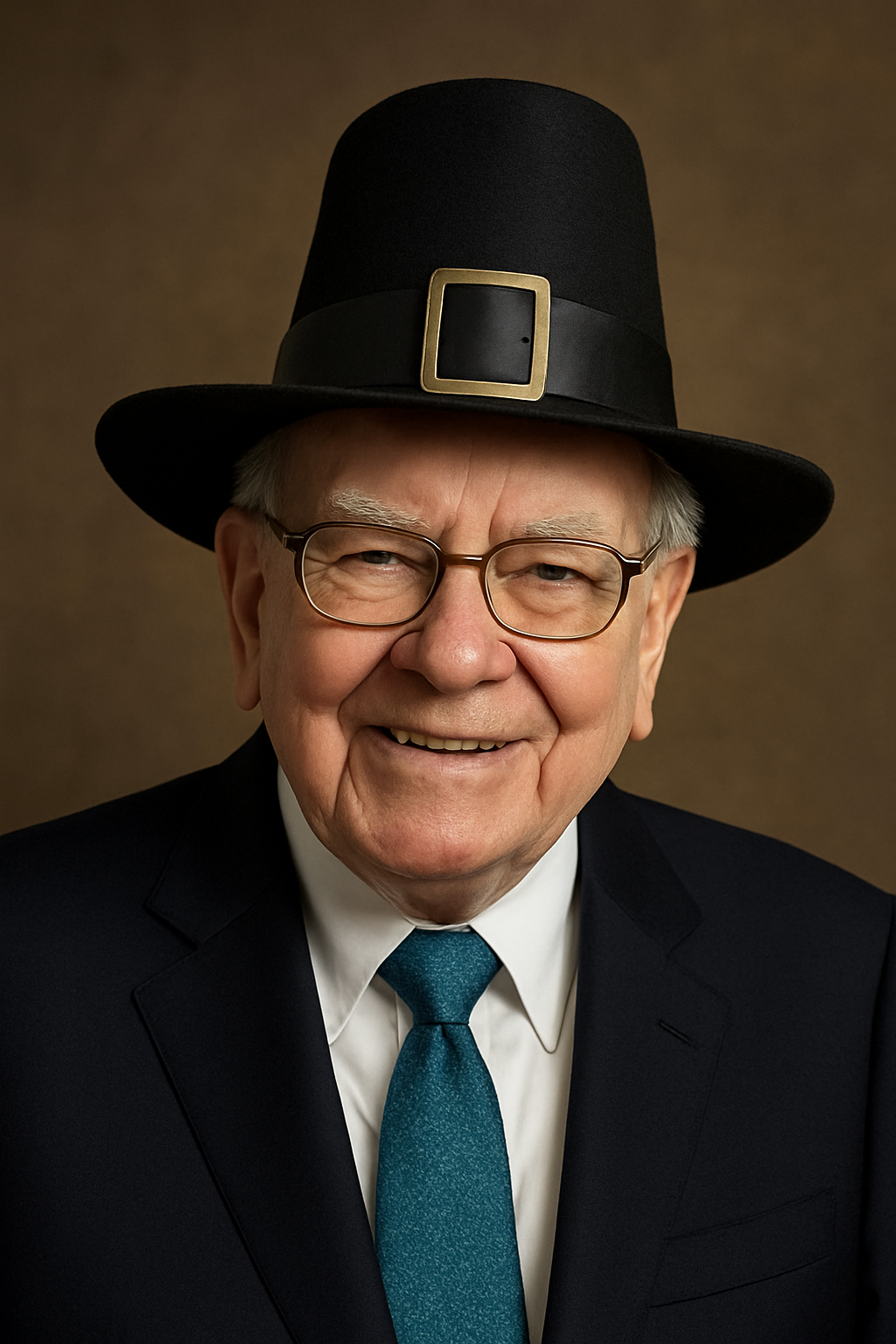
When Warren Buffett pens his final shareholder letter, the world pays attention. For nearly six decades, his annual messages have been a masterclass in financial strategy, a blend of homespun wisdom and intellectual honesty that has made Berkshire Hathaway the envy of the financial world. Part financial education, part moral compass, throughout my career I’ve eagerly looked forward to their publication on the last Saturday in February.
His farewell note, “A Few Final Thoughts,” isn’t about stock picks or market forecasts. Instead, Buffett reflects on the underestimated role of luck, the necessity of humility and the search for purpose. These insights offer profound lessons for every IBJ reader.
Now 95 and soon stepping down as Chairman, the “Oracle of Omaha” still reports to the office five days a week, but acknowledges “Father Time is undefeated.” While he may no longer have his “fastball” and is “going quiet” (as the British would say), he can still “bring the heat.”
Buffett, ever the storyteller, uses his final letter to remind readers of life’s unpredictability and the outsize role of luck. He begins not with a tally of a lifetime of extraordinary investment success, but with gratitude for the roll of Lady Luck. He credits his success to the unearned fortune of birth—being “healthy, reasonably intelligent, white, male and in America,” noting his sisters who had “equal intelligence and better personalities,” faced a “much different outlook.” “Through dumb luck, I drew a ridiculously long straw at birth,” he writes, underscoring that humility is the beginning—never the end–of wisdom.
“But Lady Luck is fickle and—no other term fits—wildly unfair,” he continues. “In many cases, our leaders and the rich have received far more than their share of luck—which, too often, the recipients prefer not to acknowledge. Dynastic inheritors have achieved lifetime financial independence the moment they emerged from the womb, while others have arrived, facing a hell-hole during their early life.”
Unfortunately, we all know folks who were born on third base, but truly believe they hit a triple. Buffett notes humility and gratitude are key because they both ground us and remind us how fragile good fortune can be.
Buffett recalls Alfred Nobel’s wake-up call was reading his own obituary, mistakenly published when his brother died. Horrified by how he was described, Nobel resolved to change his life—and ultimately leading to the creation of the Nobel Prizes.
Echoing Morgan Housel’s charge in The Art of Spending Money: Simple Choices For a Richer Life to write your own “reverse obituary” (highlighted in my most recent column, “To master ‘art of spending,’ write a ‘reverse obituary’”), Buffett urges: “Don’t count on a newsroom mix-up: Decide what you would like your obituary to say and live the life to deserve it.”
“Greatness does not come about through accumulating great amounts of money, great amounts of publicity or great power in government,” he continued. (He still lives in the modest Omaha house he purchased in 1958). “When you help someone in any of thousands of ways, you help the world. Kindness is costless but also priceless. Whether you are religious or not, it’s hard to beat The Golden Rule as a guide to behavior.”
The road to living your “reverse obituary” won’t be smooth. Mistakes and setbacks are inevitable. Buffett’s advice: “Don’t beat yourself up over past mistakes—learn at least a little from them and move on. It is never too late to improve. You will never be perfect, but you can always be better. Get the right heroes and copy them.” Further, “I write this as one who has been thoughtless countless times and made many mistakes, but also became very lucky in learning from some wonderful friends how to behave better (still a long way from perfect, however). Keep in mind the cleaning lady is as much a human being as the Chairman.”
We’re living in tumultuous times. This Thanksgiving, gratitude isn’t just a holiday tradition—it’s an antidote to anxiety and discontent. Gratitude isn’t passive. It moves us to treat others with kindness, to give more freely, to live more intentionally. While markets and circumstances are ever-shifting, gratitude helps us respond with clarity instead of anxiety. Gratitude asks us to slow down, reflect on the people who shaped us, forgive ourselves for the mistakes we’ve made and write–or rewrite–our own “reverse obituary.”
Thankfulness doesn’t ignore hardship; it helps us see what’s still good—and builds the resilience to keep going. Buffett reminds us wisdom, purpose and peace compound just like money, when you nurture them.
As we gather this holiday, let’s remember gratitude is the ultimate investment, kindness the ultimate dividend and legacy the ultimate return. Let us aspire to legacies defined not by money, status or headlines, but by gratitude, generosity and the daily practice of becoming—however imperfectly—better than we were yesterday. May our reverse obituaries speak not of wealth amassed, but of lives enriched—loved by many, grateful for much and truly the richest people in town.
The opinions expressed in these articles are those of the author as of the date the article was published. These opinions have not been updated or supplemented and may not reflect the author’s views today. The information provided in these articles are not intended to be a forecast of future events, a guarantee of future results and do not provide information reasonably sufficient upon which to base an investment decision and should not be considered a recommendation to purchase or sell any particular stock or other investment.